

Top 5 Warning Signs To Know When to Replace a Car Battery
 The following are the top failing battery signs, however sometimes these same issues are caused by a failing charging system such as a missing drive belt for your alternator or a failing alternator.
Dim headlights, insufficient power to crank the engine when starting, engine light turned on on your dash, frequent jump-starts, your battery is old, and your dash lights are on, but the engine won’t start.
Take action now before the battery is completely dead. Note that cars with automatic transmissions must be jump-started instead of pushing the car to start.
Also, check your battery connections to make sure the connections are snug and not loose. If there is a lot of corrosion around the terminals, clean the terminals off, and tighten the connections.
1. Slow starting (Weak alternator?)
A weak alternator can sometimes not produce sufficient power to charge the battery and run all of your vehicle’s electrical systems at the same time.
As a result, your battery gradually drains until it cannot longer provide sufficient power to crank the engine. As soon as you notice your engine is slow to start, have the battery and the alternator checked.
2. Check engine light
The check engine light comes on for many reasons. It is a general indicator that something is not quite right with your engine’s systems. If your lights are dim, your car is hard to start, or the starter makes a clicking sound; there is a pretty good chance the battery is not fully charged.
Have a mechanic check the error codes produced when the check engine light comes on to confirm what triggered the engine light to illuminate.
3. Electrical system failure
It is unusual for the vehicle’s electrical system to suffer a complete failure; however, individual components can fail, making it seem as if the entire system just stopped working.
Corroded and broken electrical cables can have this effect. A broken alternator belt can have the same effect causing your battery to be drained of electrical power until your car just stops running.
4. Corroded battery terminal
A heavily corroded battery terminal is an indicator that the connection is slowly building up resistance and killing your battery. Corroded terminals may also indicate your battery is nearing the end of its life cycle.
Every time you pop the hood of your vehicle, check the battery terminals for signs of corrosion. Clean the terminals off and make sure the cables are also tight for a good connection to ensure your car runs well all of the time.
5. Jump start the car battery frequently
A sure sign that there is something not quite right with your battery or charging system is having to jump-start your car frequently. Perhaps you are also connecting a battery charger frequently so you can start your car.
The battery does not have sufficient power to start the engine. Either it is not charging properly or cannot hold a charge. Have your battery and alternator checked?
What to look For When Buying a Battery Replacement?
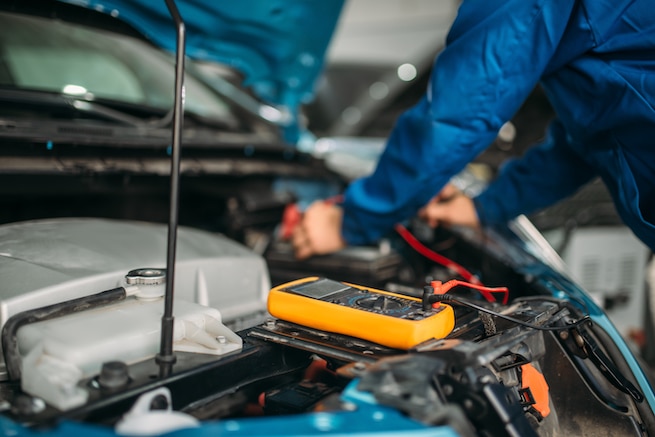 There are several factors to consider when you replace your car’s battery. But first, always refer to your owner’s manual for recommendations regarding the proper battery for your vehicle. Most auto parts stores can provide several choices in batteries that fit your vehicle.
Factors to consider are: Physical size, battery freshness-when was it produced, reserve capacity time running on its own, power requirements, e.g., cranking amps, maintenance-free or needs regular maintenance, warranty – replacement and prorated, type and location of terminals, amp-hours of output, battery life expectancy, and your own previous experience with a particular battery or auto parts store.
1. Cranking amps
A battery must supply sufficient cranking amps to start your car at a temperature of 32 degrees Fahrenheit. Refer to your owner’s manual for this specification and ensure you purchase a battery that meets this requirement. The number of amps needed depends on the type and size of the engine in your vehicle.
2. Cold cranking amps
Similar to cranking amps, cold cranking amps is the number of amps to start your car’s engine at zero degrees Fahrenheit. Your car’s engine is more difficult to start at colder temperatures, and the battery must supply sufficient power to start the car.
Consumers living in colder climates, especially with winter driving, must consider cold cranking amps’ specifications.
3. Auto battery type
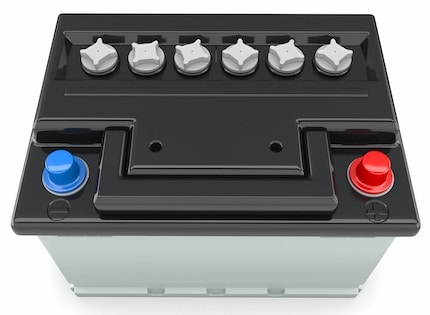
There is a multitude of battery types,. However, most cars use the standard lead-acid battery, which can be purchased requiring regular maintenance and those that are sealed, and you never need to check your batteries.
Regular maintenance consists of checking the acid levels in the battery once a month and adding distilled water if needed. Hybrid and all-electric vehicles are using lithium batteries, which cannot be serviced by consumers.
4. Warranty on the battery
Most new batteries come with a free replacement period and a prorated period. Free replacement means the supplier replaces the battery free of charge within a specified period.
After this initial period of time, the cost of replacing the battery is shared between the supplier and the customer based on a proration of the time left on the warranty and the initial purchase date.
5. Vehicle battery size
The size of your battery can make a huge difference. Most vehicles have a designated location for the battery, which has physical size limitations.
While you could use a physically smaller vehicles battery, you cannot place a physically larger battery in this space. The battery must also be secured properly to the vehicle so that it does not move while the vehicle is being operated.
FAQ About Battery Replacement
The following are several frequently asked questions that many people have when it comes to replacing a battery, how long a battery lasts, what a battery costs, and do you need to purchase special batteries for your vehicle. If you have changed the battery and are still having problems, have your charging system checked as well. [su_shadow style=”simple”] [su_panel shadow=”none”]
What is the average Lifetime of a battery?
 The average lifetime of a battery varies depending on the vehicle and the conditions it must operate in. Extreme cold can shorten the life-cycle as well as many deep discharge cycles.
The rule of thumb is that most last an average of four years, with some lasting as long as six years under great conditions. As you near the four years, have your battery checked. You may want to change the battery if you detect some of the telltale signs of battery failure. [/su_panel][/su_shadow] [su_shadow style=”simple”] [su_panel shadow=”none”]
How much does it cost to replace the battery without warranty?
The cost to replace the battery depends on the type of car and where you purchase the new battery. Typically, a battery should cost between $80 to $150, although batteries for luxury vehicles can be higher.
Expect to pay another $50 to $100 for the battery to be installed. Heavy-duty batteries for trucks and large SUVs may cost more. Batteries that are in difficult to access locations also cost more for installation. [/su_panel][/su_shadow] [su_shadow style=”simple”] [su_panel shadow=”none”]
Does my car need a special battery?
While the average car does not need a special battery, you do need one that fits physically into the location allocated for the battery. If you are installing the battery yourself, provide the make and model of your vehicle to the battery salesperson, and he can select the correct battery for your car.
[/su_panel][/su_shadow]
Car Battery Tips
As batteries age, there are telltale signs that may indicate it is time to replace your battery. A clicking sound or slow cranking when starting your car, dim lights, and frequent jump-starts are strong indications.
Don’t wait until it leaves you stranded along the roadside. A tow truck can be expensive as well as inconvenient. Have your battery and charging system inspected and tested. Your battery could be fine. However, the alternator is generating insufficient power to run your car and keep your battery fully charged.
Battery Replacement Summary
Arrange for a battery replacement if it is nearing the average age limit for batteries. Although you may want to use it as long as possible, change your car batteries now, which may be a less expensive alternative compared to calling for a tow truck.
New cold weather batteries have better components. Also, regular battery management and maintenance can avoid many future problems for an extended period of time. If you like our reviews please leave comments bellow, and for more tips on alignment and repair visit our blog.